Why Clawdbot Exploded

There’s a moment in every technology cycle when something shifts. Not with a press release or a keynote, but with a whisper — a growing chorus of developers saying “wait, you can do that?”
Clawdbot is having that moment.
In the span of weeks, it’s grown from a few hundred users to over 20,000. Not through marketing. Not through hype. Through word of mouth from people who tried it and realized they’d been thinking about AI assistants all wrong.
Here’s why.
1. Integration is its Superpower
The dirty secret of most AI assistants is that they’re islands. Beautiful, intelligent islands — largely disconnected from the tools you actually use.
Clawdbot takes a radically different approach:
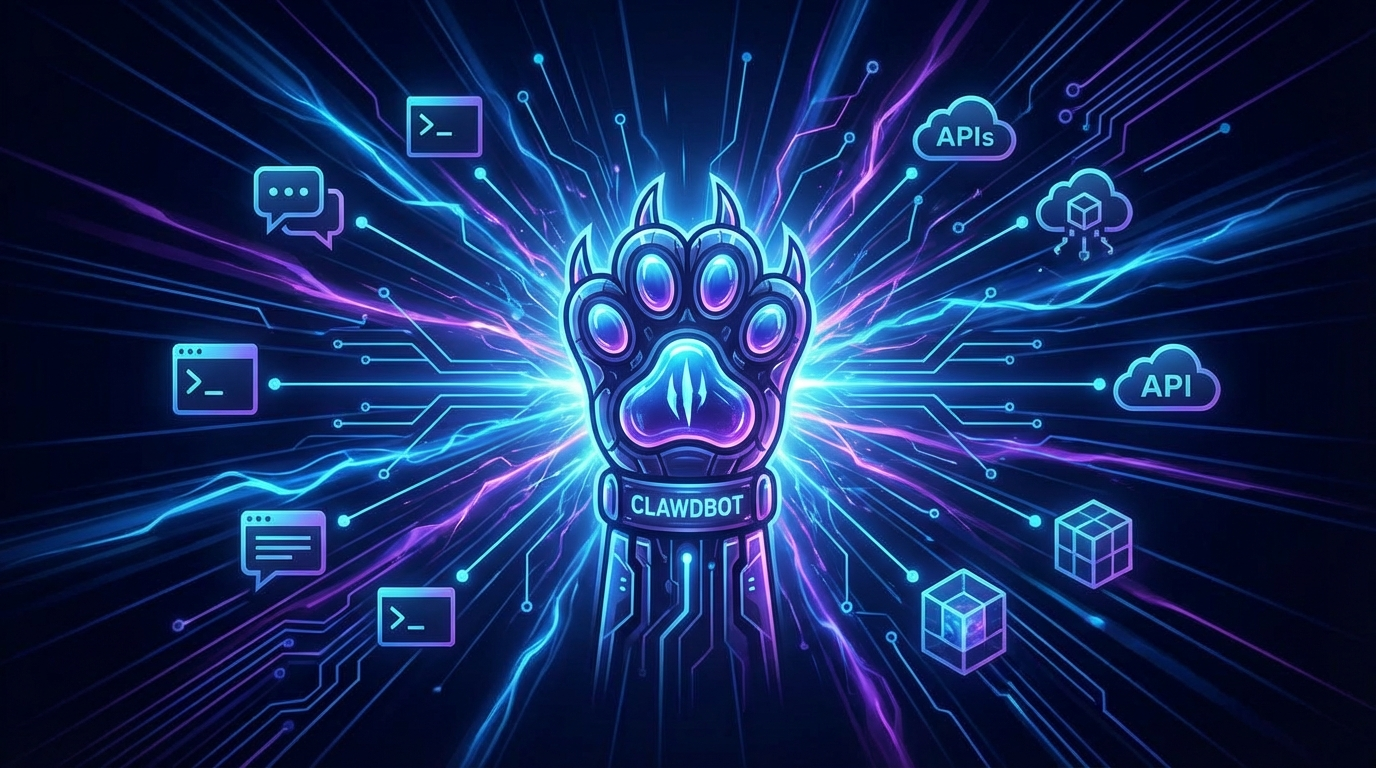
if it has an API, you can chat with it.
The magic isn’t just that Clawdbot can integrate with services — it’s that AI can build the integrations. Need to talk to your Oura Ring? There’s ouracli. Want to manage your Ghost blog from the terminal? ecto. Microsoft 365? mogcli. Fizzy.do Kanban? fizz. IMAP/CalDAV/CardDAV? sogcli.
These aren’t corporate integrations built by product teams over months. They’re lean Command Line Interfaces (CLIs) and very single one was written by "me" + Clawdbot. Except I didn't write a single line of code; I just wrote the instruction manual (vContext + dashdash and a project I hope to release this week) and the requirements.
The pattern is simple:
- Find an API
- Build a CLI that wraps it
- Add
--ai-helpfor discoverability - Build a SKILL.md from the --ai-help output
- Clawdbot can now use it
This is integration at the speed of thought. And it compounds — every new CLI makes the system more capable, which attracts more builders, who create more integrations.
2. It Comes to Where You Already Live
Most AI products ask you to change your behavior. New app. New tab. New context switch.
Clawdbot inverts this. It shows up where you already are:
- Telegram
- Discord
- Slack
- Signal
- iMessage
No new app to install. No new interface to learn. Just talk to it the same way you’d message a colleague.
This sounds simple. It’s not. Building a truly multi-channel AI assistant that maintains context, handles media, and feels native on each platform is genuinely hard. But it’s also genuinely right — AI should adapt to us, not the other way around.
The result? Clawdbot becomes ambient. It’s there when you need it, invisible when you don’t. You stop thinking about “using an AI tool” and start just… getting things done.
3. A Healthy, Thriving Open Source Community
Clawdbot isn’t just open source — it’s bazaar open source in the truest sense.
The Discord community isn’t just a support channel; it's a social conversation. People share skills, debug each other’s setups, and push the boundaries of what’s possible. ClawdHub serves as a skill directory where anyone can contribute (Clawdhub is in bad shape right now though, I'm working on rebuilding it).
This matters because the best AI assistant isn’t the one with the most features — it’s the one that can grow with its community. When a user needs something that doesn’t exist, they can build it. When they build it, everyone benefits.
No vendor lock-in. No waiting for a product roadmap. No “please submit a feature request.” Just fork, build, share.
4. The Guts to Try What Big Companies Won’t
There’s a reason you don’t see Google or Microsoft shipping the features Clawdbot has. Big companies have lawyers. They have brand risk. They have shareholders who get nervous.
Clawdbot operates differently:
- Browser control that can navigate, click, fill forms, and extract data
- Full shell access to run commands, manage servers, deploy code
- Cross-service orchestration — “check my calendar, send a Slack message, and create a GitHub issue” in a single breath
These are features that emerge when you trust users to be adults and let them decide their own risk tolerance.
Is it powerful? Yes. Can you shoot yourself in the foot? Also yes. But that’s the Unix philosophy — make it possible, document it well, and let people build amazing things.
5. Radically Agnostic
Clawdbot doesn’t care:
- Model agnostic: Claude, GPT, Gemini, local models via Ollama — use what works for your use case
- Vendor agnostic: No cloud lock-in, runs on your machine, your data stays yours
- Platform agnostic: macOS, Linux, Windows, Docker, whatever
- Channel agnostic: Talk to it from any messaging platform you prefer
This is a design philosophy, not a compromise. When you’re not trying to lock users in, you can focus on making the experience good instead of making it sticky.
6. What Makes It Different Is What It Doesn’t Do
Most AI assistants try to be everything. Clawdbot tries to be a great interface to everything else.
It doesn’t try to replace your task manager — it talks to Fizzy, or Todoist, or Microsoft To-Do (RIP Wunderlist). It doesn’t try to reinvent the wheel — it gives you a steering wheel.
The philosophy is UNIX-native: do one thing well (be an intelligent, multi-channel interface) and compose with tools that also do one thing well (CLIs, APIs, services).
The result is an assistant that gets more useful the more tools you already use, instead of asking you to consolidate into yet another walled garden.
The Quiet Part
Here’s what I think is actually happening:
We’re in the early days of a shift where AI assistants stop being products and start being protocols. The value isn’t in the model — models are commoditizing. The value is in the glue: the integrations, the channel flexibility, the community knowledge, the accumulated skills.
Clawdbot is building that glue in the open, with a community that owns it, on infrastructure that isn’t going anywhere.
Twenty thousand users found it without a marketing budget. The next twenty thousand will find it because this one told them about the time they automated their entire morning routine in a single conversation.
That’s the quiet revolution. It doesn’t ask for permission. It just works.
Clawdbot is open source and available at github.com/clawdbot/clawdbot. Join the community at discord.com/invite/clawd.